
Here's the thing about buying a home in Houston. The purchase price is only part of the story. And honestly? It's the part that trips up the most people, especially if you're moving here from out of state.
I moved to Houston from San Francisco about ten years ago. When my partner and I first started looking at home prices here, we thought we were reading the listings wrong. A 2,000-square-foot house for under $300K? My parents' place in Orange County is roughly the same size and it's worth $1.8 million. So yeah, Houston looks like a steal on paper.
But there are real costs baked into homeownership here that don't show up on Zillow or in your mortgage calculator. And if you don't know about them going in, that monthly payment you budgeted for can look very different from the one that actually hits your bank account.
Let me walk you through the big ones.
Property Taxes Will Be Your Biggest Surprise
If you're coming from a state with income tax, you're probably excited about Texas having none. I get it. I was too. But Texas makes up for it with property taxes, and they are not messing around.
The average effective property tax rate in the Houston metro area hovers around 2% to 2.5% of your home's appraised value. On a $350,000 home, that's somewhere between $7,000 and $8,750 a year. That's roughly $580 to $730 tacked onto your monthly payment.
For context, California's property tax rate is around 0.7%. So if you're relocating from somewhere like that, this number is going to feel aggressive. It did for me.
The good news is Texas has a homestead exemption. Once you file it (and you absolutely should, the moment you close), it knocks a chunk off your taxable value. School districts, county, and sometimes your MUD all offer their own exemptions on top of that. It adds up. But you have to actually file it. It's not automatic.
Flood Insurance Is Not Optional in a Lot of Areas
This is one I feel strongly about, because when my partner and I bought our first place, our agent at the time never even brought up flood zones. We got lucky. A lot of people don't.
Houston is flat. It floods. That's just the reality. If your home is in a FEMA-designated flood zone, your lender will require flood insurance. But even if you're not in a flood zone, I still tell every single client to seriously consider it. Houston has a history of flooding in areas that aren't technically on the map.
Flood insurance premiums vary wildly. You could pay $500 a year or $3,000+ depending on the zone, the elevation, and the age of the home. On some properties, the premium is so high it changes the math on whether the house makes sense at all.
I had a deal where my buyer's heart was set on one specific house. Their family lived across the street, it was the only property they wanted. When the lender came back, the flood insurance premium pushed the monthly payment out of reach. We got creative and found a workaround with an assumable flood policy from the seller, but that's not always possible. You have to know these numbers early.
MUD Taxes: The One Nobody Googles
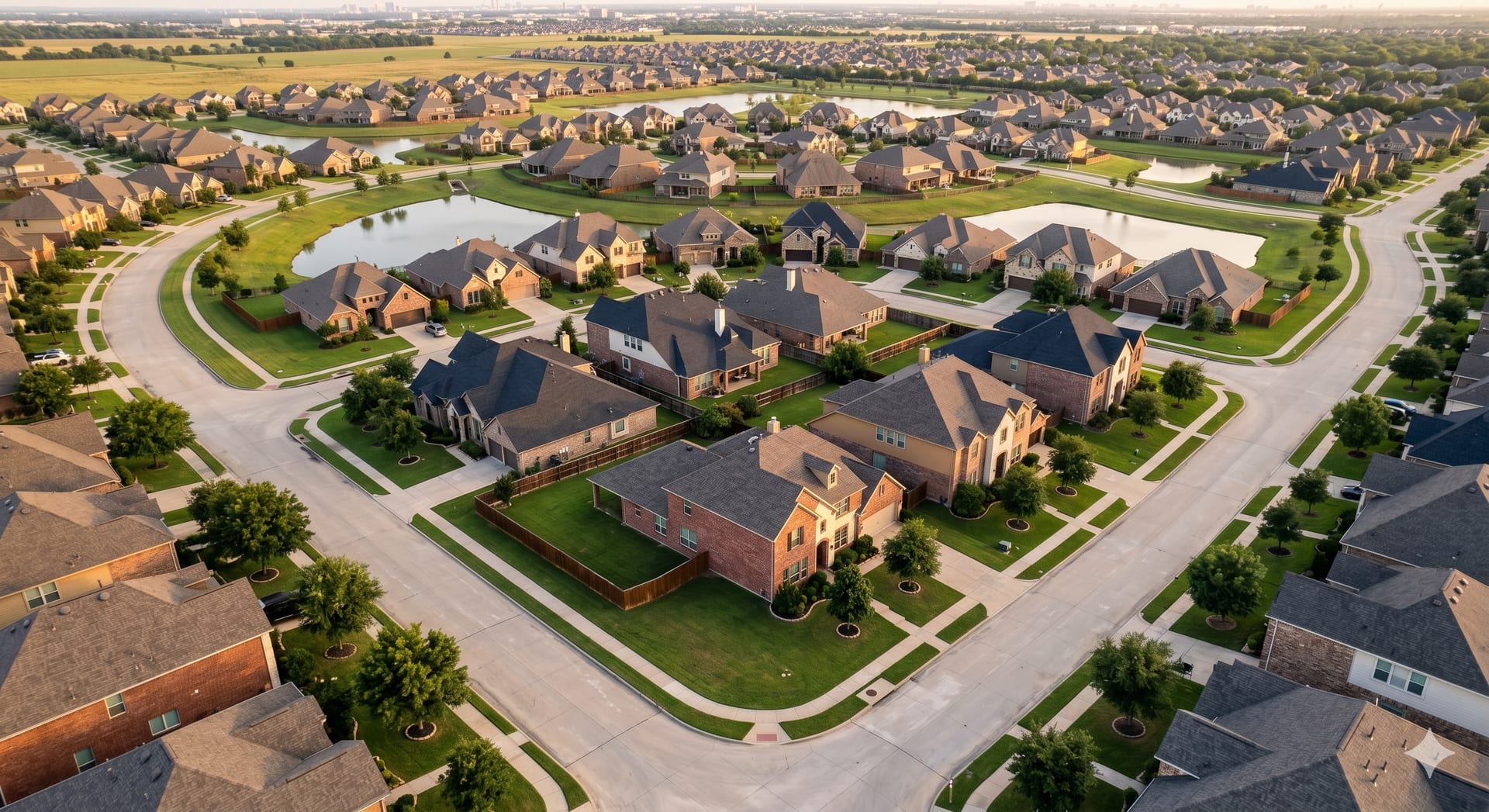
MUD stands for Municipal Utility District. A lot of newer developments in the Houston suburbs (especially in areas like Manvel, Pearland's newer sections, and parts of League City) sit inside a MUD.
What that means for you: an additional tax on top of your regular property taxes that pays for the water, sewer, drainage, and road infrastructure in your neighborhood. MUD tax rates vary, but they can add anywhere from 0.5% to over 1% to your total tax bill.
So that $350,000 home? If it's in a MUD, you might be looking at a combined tax rate closer to 3% or more. That's over $10,000 a year in taxes alone.
MUD taxes aren't a dealbreaker. Plenty of beautiful, well-maintained neighborhoods are in MUDs. But you need to know the rate before you make an offer, not after. I pull this information for every property my clients look at. It should never be a surprise at closing.
Foundation Issues Are a Houston Thing
Houston sits on expansive clay soil. When it rains, the clay expands. When it's dry, it contracts. Over time, that movement can mess with your home's foundation.
This doesn't mean every house in Houston has foundation problems. But it does mean foundation awareness should be part of your buying process. A standard home inspection will flag visible signs (cracks in walls, doors that don't close right, uneven floors), but a full structural inspection by a foundation specialist is worth the investment, especially on older homes.
Foundation repairs can run anywhere from $3,000 for minor pier work to $15,000 or more for significant leveling. Some sellers will negotiate this. Some won't. Either way, you want to know what you're working with before you close.
I tell my clients: this isn't something to panic about. It's something to be informed about. Most homes here are totally fine. But the ones that aren't can get expensive fast if you're not paying attention.
Homeowners Insurance Is Higher Than You Think
Texas homeowners insurance rates are among the highest in the country. Between hurricane risk, hail, and the general cost of claims in this region, premiums here tend to run $2,000 to $4,000+ per year for a standard policy.
That's separate from flood insurance. That's just your regular homeowners coverage.
If you're coming from a state where you were paying $800 a year for homeowners insurance, this is going to be a wake-up call. Shop around, get multiple quotes, and ask your lender for recommendations. The difference between carriers can be significant.
Closing Costs Still Catch People Off Guard
Even buyers who've done their research sometimes underestimate closing costs. In Texas, you're typically looking at 2% to 5% of the purchase price. On a $300,000 home, that's $6,000 to $15,000 due at closing, on top of your down payment.
That includes title insurance, lender fees, prepaid taxes and insurance, appraisal, survey, and a handful of smaller charges that add up fast.
The good news? In this market, there's room to negotiate. Sellers are often willing to contribute toward closing costs, especially with Houston's current inventory levels. It's a conversation worth having early with your agent and your lender.
What Your Mortgage Calculator Isn't Telling You
Here's what I want you to take away from all of this. When you plug a purchase price into an online mortgage calculator, you're getting a number that probably doesn't include property taxes at Houston's rates, flood insurance, MUD taxes, or realistic homeowners insurance.
The three real line items that out-of-state buyers miss are property taxes, homeowners insurance, and flood insurance. Those three things can add $800 to $1,500+ to your monthly payment beyond what the basic calculator shows you.
That doesn't mean buying in Houston isn't worth it. It absolutely is. I bought my first house at 27, two years after moving here, and I have family in California in their 40s and 50s who may never own. The value here is real. But you have to go in with the full picture.
So Here's the Deal
None of this is meant to scare you off. My backyard in Texas is bigger than any apartment I could've rented in San Francisco, and my mortgage is a fraction of what my family pays in California. The value here is real. But "affordable" doesn't mean "no surprises." And the surprises are what get people.
Talk to a lender early. Get the real numbers. Factor in taxes, insurance, and any MUD fees before you fall in love with a house that's outside your actual budget.
If you're thinking about buying in Pearland, League City, Sugar Land, Friendswood, or anywhere in the south Houston area, I walk every client through these costs upfront so there are no surprises at closing. That's just how I do it. Reach out anytime.