
Buying your first home is one of those things that feels way more complicated than it actually is. Mostly because nobody sits you down and explains the process from start to finish. You get bits and pieces from friends, random TikToks, and your parents who bought their house 25 years ago when the process was completely different.
I work with first-time buyers constantly. It's my favorite part of this job, honestly. I love taking someone from "I have no idea what I'm doing" to "I just got my keys." Watching their face at closing when it finally hits them that they own a home. I've cried at closings. More than once. I'm not even a little sorry about it.
Here's the whole process, start to finish. No jargon, no fluff, just the real version.
Step 1: Talk to a Lender (Before You Do Anything Else)
This is my number one piece of advice for every single person thinking about buying: get pre-approved first. Before you start looking at houses. Before you start browsing Zillow at midnight. Before any of it.
Here's why. You might think you can afford a $400,000 house because some online calculator told you so. But once a lender looks at the full picture (your income, your debt, your car payment, your student loans, your credit score), the number might be different. Maybe higher, maybe lower. Either way, you need to know.
I've had the hard conversation with buyers who came to me wanting to look at homes they weren't approved for. That's a painful spot to be in, and I don't want that for you.
A pre-approval letter tells you exactly what you can afford, what your interest rate will look like, and what your estimated monthly payment will be. It also tells sellers you're a serious buyer. In Houston's market, that matters.
And here's the thing most people don't realize: you can talk to a lender a full year before you're ready to buy. If your credit needs work, if you need to pay down a car note, if you need to save a little more, they'll tell you exactly what to do and give you a timeline. A good lender is a partner, not a gatekeeper.
Don't have a lender? I work with several who are great with first-time buyers and won't make you feel stupid for asking questions. Reach out and I'll connect you.
Step 2: Figure Out What You Actually Want
Once you know your budget, it's time to think about what matters to you in a home. And I mean really think about it, not just bedrooms and bathrooms.
What's your commute situation? How far are you willing to drive? Do you need to be near certain highways? What about school districts? Do you have kids or are you planning to? Do you want a newer build or are you okay with an older home that might need updates? How do you feel about HOAs? Do you need a big yard?
I ask my clients these questions before we ever set foot in a house, because the answers narrow things down fast. Houston is huge. There are dozens of neighborhoods that could work for you, and dozens more that won't. The more honest you are about your priorities, the less time we waste looking at homes that aren't the right fit.
One thing I always say: don't look at houses above your budget. You'll just fall in love with something you can't afford, and everything in your actual price range will feel like a letdown. Protect yourself from that.
Step 3: Find a Real Estate Agent (Yes, You Need One)
I'm biased, obviously. But a good buyer's agent is worth it, especially for your first time.
The buying process has a lot of moving parts: offers, negotiations, inspections, appraisals, title work, lender requirements, timelines. A good agent manages all of that and keeps you informed every step of the way. A bad agent lets you figure it out yourself and shows up at closing.
What you should look for: someone who communicates constantly, explains things clearly, has experience in the area you're looking at, and tells you the truth even when it's not what you want to hear. I've told clients "this house isn't worth what they're asking" and "your offer is going to get rejected at that number." Not because I enjoy being the buzzkill, but because that's my job. I'd rather you be prepared than surprised.
I had clients once who were told by other agents they couldn't buy a home. I didn't give up on them. I connected them with the right lender, helped them understand what needed to happen, and we worked through it step by step. They got into their first home. That deal meant everything to me. Someone was told "no" and we found the "yes."
That's the kind of agent you want in your corner.
Step 4: Start Looking at Homes
This is the fun part. You've got your pre-approval, you know your budget, you know your priorities, and you've got an agent. Now we go see some houses.
A few things to know about this stage:
You're probably not going to find "the one" on day one. Most buyers see anywhere from five to fifteen homes before they find the right one. Some take more. That's normal. Don't panic.
I'll set you up with a search that matches your criteria and send you listings as they come on the market. You tell me what you like, what you don't, and we refine from there. The more feedback you give me, the better I get at finding homes that fit.
When you walk into a house, pay attention to how it feels. Is it the hell yes house? That's what I always ask my clients. Because you have to live in it, not me. If it's not a hell yes, we move on. There are more houses. The right one is out there.
And here's something people don't always think about: look past the paint colors and the staging. Paint is cheap. Furniture leaves when the sellers do. Focus on the layout, the bones, the location, the yard, the neighborhood. Those are the things you can't change.
Step 5: Make an Offer
You found the house. It's the one. Now we write an offer.
This is where your agent really earns it. I pull comps (comparable recently sold homes in the area), look at how long the house has been on the market, assess the seller's situation, and help you put together an offer that makes sense.
Your offer includes the price, your financing terms, your proposed closing date, any contingencies (inspection, appraisal, financing), and sometimes requests like the seller contributing to closing costs. In Houston's current market, there's room to negotiate. Inventory is up, buyers have leverage, and sellers are more flexible than they've been in years.
I'll write any offer a client wants. But I'll always give you my honest assessment first. If I think you're going too low and it'll get rejected, I'll tell you. If I think you're overpaying, I'll tell you that too. The final call is always yours.
Step 6: Get Through the Option Period
In Texas, buyers typically negotiate an option period (usually 7 to 10 days) where you have the unrestricted right to back out of the contract for any reason. You pay a small option fee for this (usually a few hundred dollars), and it's your window to do your due diligence.
This is when the home inspection happens. A professional inspector goes through the property top to bottom: roof, foundation, plumbing, electrical, HVAC, the works. They'll give you a detailed report of everything they find.
Not everything on an inspection report is a dealbreaker. Some things are routine maintenance. Some things are real issues. Your agent helps you sort out which is which and what's worth negotiating with the seller.
In Houston specifically, I always recommend paying attention to the foundation. We sit on expansive clay soil that expands and contracts with moisture. Most homes are fine, but foundation issues can be expensive, and this is when you catch them. If anything looks questionable, bring in a structural specialist. It's worth the extra $300 to $500 for peace of mind.
Also during this period: if the home might be in or near a flood zone, get clarity on flood insurance costs before you move forward. Houston floods, and the premiums can significantly change your monthly payment. I bring this up with every client. It should never be a surprise.
Step 7: Appraisal and Underwriting
While you're handling the inspection, your lender is working on the appraisal. They send a third-party appraiser to confirm that the home is worth what you agreed to pay. If the appraisal comes in at or above your offer price, you're good. If it comes in low, there's a conversation to have: sometimes the seller lowers the price, sometimes you make up the difference, sometimes you renegotiate.
At the same time, your loan is going through underwriting. The lender is verifying everything: your income, your employment, your bank statements, all of it. This is where they might ask you for random documents that feel unnecessary. Just send them. Don't make big purchases, don't change jobs, don't open new credit cards. Keep your financial life boring until you close.
Step 8: Clear to Close
Once underwriting signs off, you get the magic words: clear to close. That means your loan is fully approved and you're heading to the finish line.
Your lender will send you a closing disclosure at least three business days before closing. This document outlines every cost, every fee, every number. Review it carefully. Ask questions if anything looks off. This is your last chance to catch errors before money changes hands.
You'll also do a final walkthrough of the property, usually the day before or the morning of closing. This is just to confirm the home is in the same condition as when you went under contract, that any agreed-upon repairs were done, and that the sellers didn't leave a mess.
Step 9: Closing Day
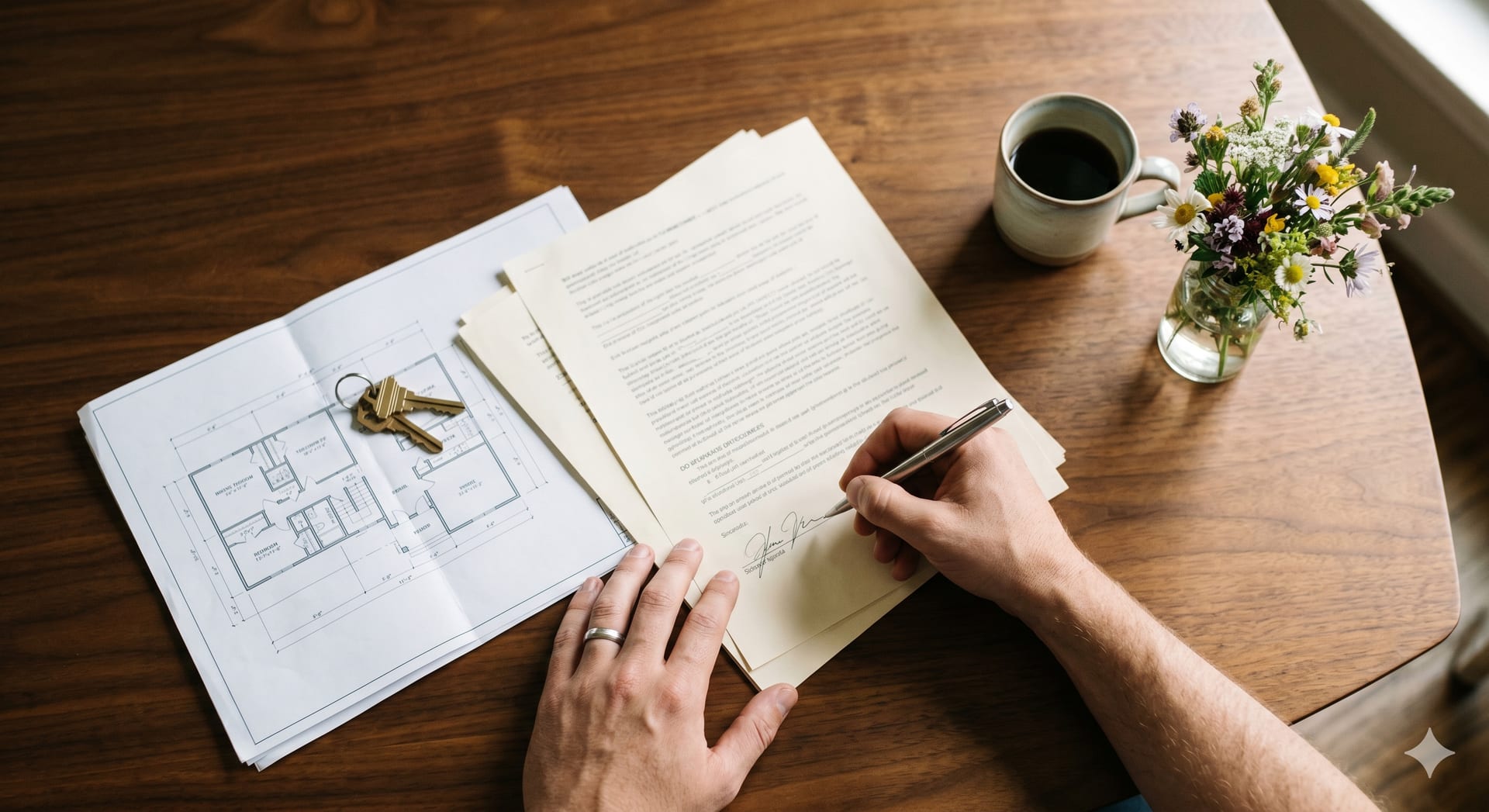
You show up. You sign a lot of papers. I mean a lot. Your hand will be tired by the end.
You'll bring a cashier's check or wire your closing funds (down payment plus closing costs minus your earnest money). The title company walks you through every document. Your agent is there. Your lender may or may not be there, but they're available by phone.
And then you get the keys.
This is the part that gets me every time. Watching someone hold the keys to their first home. The look on their face when they realize they did it. They actually own a home. I've cried at these. I'm not even going to pretend I haven't. It's the best part of my job.
Step 10: After You Close
A few things to do right away:
File your homestead exemption with your county. In Texas, this reduces your taxable property value and saves you money on property taxes every year. Don't wait. Do it as soon as you close.
Change your locks. You don't know who has copies of the old keys.
Set up your utilities if you haven't already: electricity, water, gas, internet.
Get your homeowners insurance squared away (this should be done before closing, but confirm everything is active).
And then? Enjoy your house. You earned it.
The Whole Process Takes About 30 to 45 Days
From accepted offer to closing, the typical timeline in Houston is 30 to 45 days. The pre-approval and house hunting phase before that can take as long as you need. Some buyers find their home in two weeks, some take six months. There's no wrong timeline. The point is to find the right house, not the fastest one.
I know this looks like a lot when you write it all out. But you're not doing this by yourself. That's literally my job. I answer every question, even the ones you think are dumb (they're not), and I keep you in the loop at every step so nothing catches you off guard.
If you're thinking about buying your first home in Houston (even if you think you're a year out), reach out. Especially if you think you're a year out. That's the best time to start the conversation.